How to Use Customer Stories as Proof in Sales.

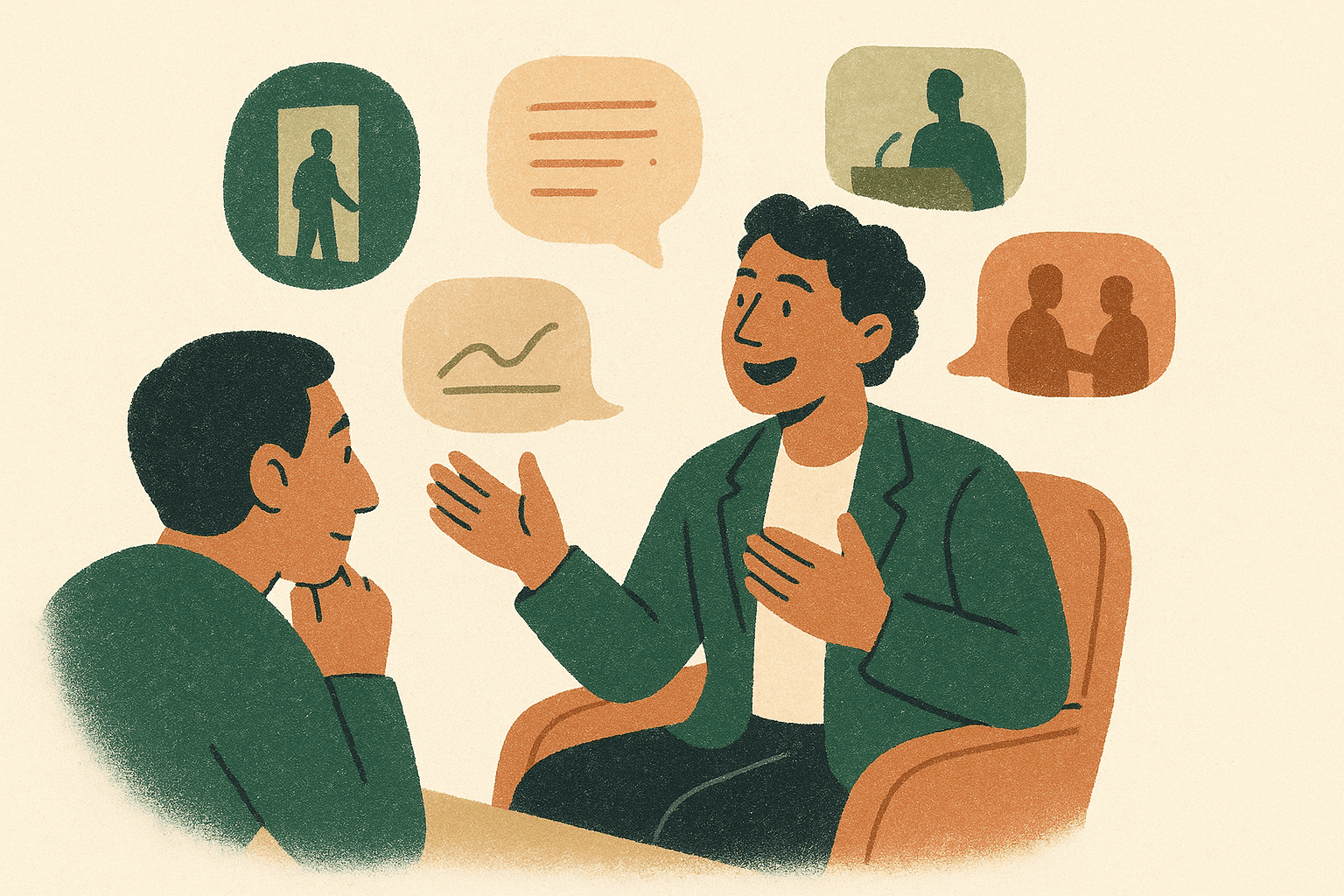
Here is something worth remembering. A buyer trusts another buyer far more than they trust you. You can say your product is great all day long. It still sounds like a sales pitch. But when you say "a team just like yours had this exact problem, and here is what happened next," people lean in. That is the power of a customer story. It turns your claim into proof.
The mistake most people make
Most people make big claims with nothing behind them. They say things like "we save teams loads of time" or "our customers love us." It sounds nice. It also sounds like what every other seller says. The buyer has heard it a hundred times, so it just washes over them. Without a real story, your claim is only your opinion. And your opinion is the one thing the buyer trusts least.
What good proof sounds like
Good sellers back up the case with a story the buyer can see themselves in. They pick a customer who looks like the person they are talking to. Same industry, or same job, or same kind of problem. Then they share what changed for that customer. The buyer thinks "that is me." The claim stops being a pitch and starts being proof.
How to do it

Match a story to each type of buyer you sell to.
Don't grab a random story mid-call. Sort your best stories by buyer type ahead of time, so the right one is ready.
Keep one story for sales leaders, one for founders, and one for ops managers.

Pick someone in their world.
A story lands hardest when the customer looks like the buyer. Same industry or same job beats a famous logo that has nothing in common with them.
"You run a small sales team, so let me tell you about another five-person team that used meritt."

Tell it short, with the result.
Keep it to three beats. The problem they had, what they did, and what changed. End on a clear result, not a feature.
"They were losing two good reps a quarter. They changed how they hired. Now they keep them."
See the difference
"Honestly, meritt works really well. Our customers get loads of value and they're really happy. You'd be in good hands." It sounds fine, but it is all claim and no proof. The buyer has no reason to believe it.
"You said you keep losing reps in the first ninety days. A sales leader I work with had the same thing. She changed how she screened people up front. Last quarter she lost none. Want me to walk you through what she did?"
Same point. One sounds like a pitch. The other sounds like proof, because there is a real person and a real result behind it. The buyer can picture themselves in that story, and that is what makes them believe you.
How you'll know it's working
You've got this when you back your case with customer stories that fit the buyer in front of you. Listen to your next call. When you made a claim, did you follow it with a real example? Did you reach for a customer in the buyer's own world, not just a big name? If the buyer nodded along and said "that sounds like us," your story did its job.
Questions people ask
How do I use customer stories in a sales call?
Use a customer story right after you make a claim, so the claim has proof behind it. Pick a customer who looks like the buyer, then share three quick beats: the problem they had, what they did, and the result. This works because a buyer trusts another buyer far more than they trust a seller's own words.
Which customer story should I pick?
Pick the customer who is closest to the buyer you are talking to. Same industry, same job, or same problem beats a famous logo with nothing in common. The point of the story is for the buyer to think "that is me," and that only happens when the customer in the story feels familiar to them.
How long should a customer story be?
Keep it to three short beats: the problem, what they did, and the result. Thirty seconds is plenty. A long story loses the buyer and buries the point. End on a clear result the buyer cares about, like reps kept or hours saved, not a list of product features.
What if I don't have a customer story to use?
Build a small set before your next call. Take a few real customers, sort them by buyer type, and write each one in three lines. You only need two or three good ones to start. A short, true story you can tell from memory beats a long case study you have to read off a slide.
How do I use a customer story to answer an objection?
Match the story to the exact worry. When a buyer says "I'm not sure this will work for a team our size," don't argue. Tell a story about a customer that size who had the same doubt and what happened after. Ending on their result answers the objection without a fight, because a real example beats a promise. Keep one story ready for each objection you hear most.
Should I use a case study or a customer story?
Use both, but for different people. A case study is the hard numbers, the return, the proof a careful, analytical buyer needs. A customer story is the human version, the person like them who had the same doubt and came out fine. The case study answers "does this work?" The story answers "will it work for me?" Read the room: lead with numbers for a finance mind, lead with the story for a nervous one.
Hire with Assessment.
£7-10k flat fee. The methodology, delivered.
See Hire with Assessment